
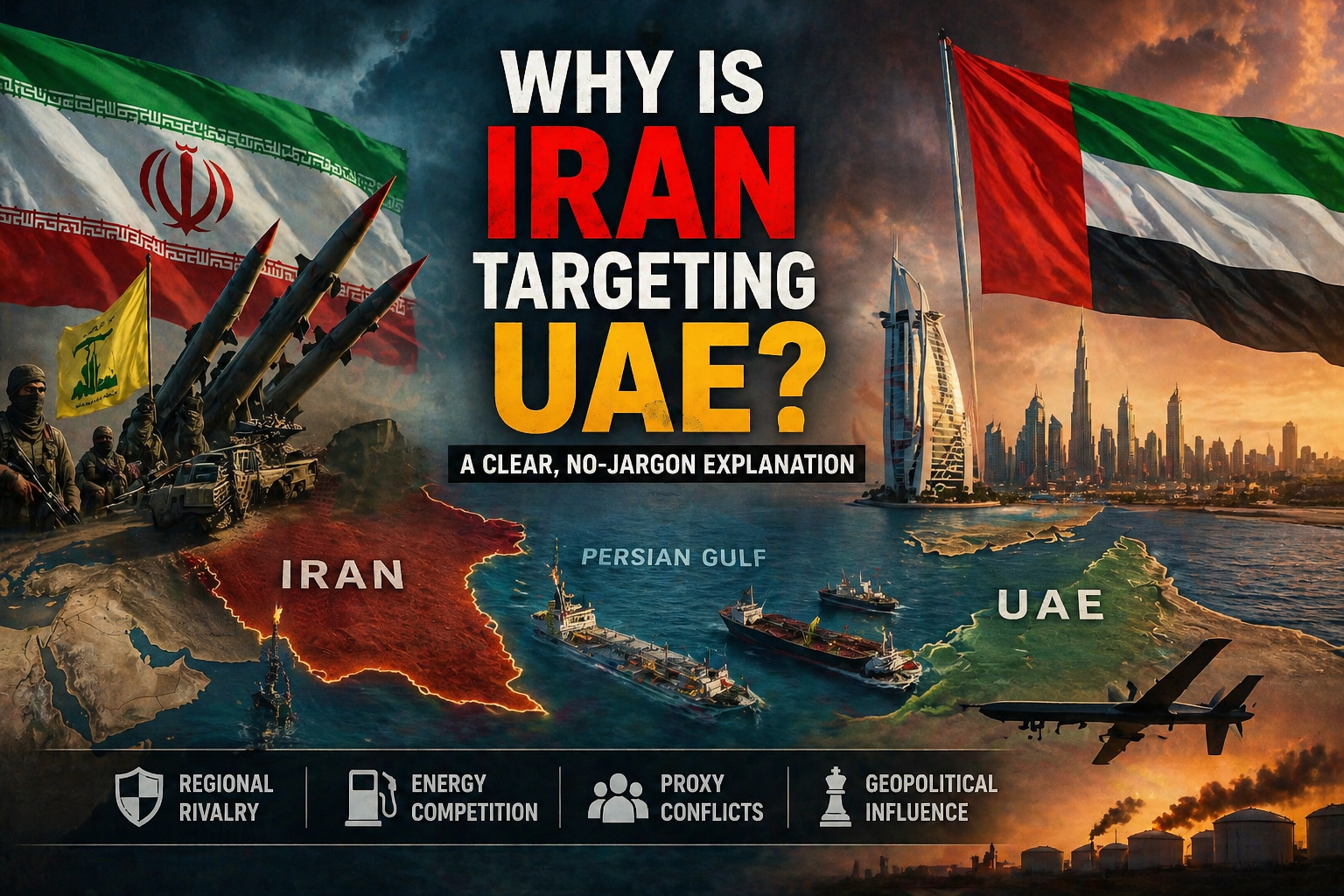
Introduction
Something is brewing in the Persian Gulf — and it’s been simmering for decades.
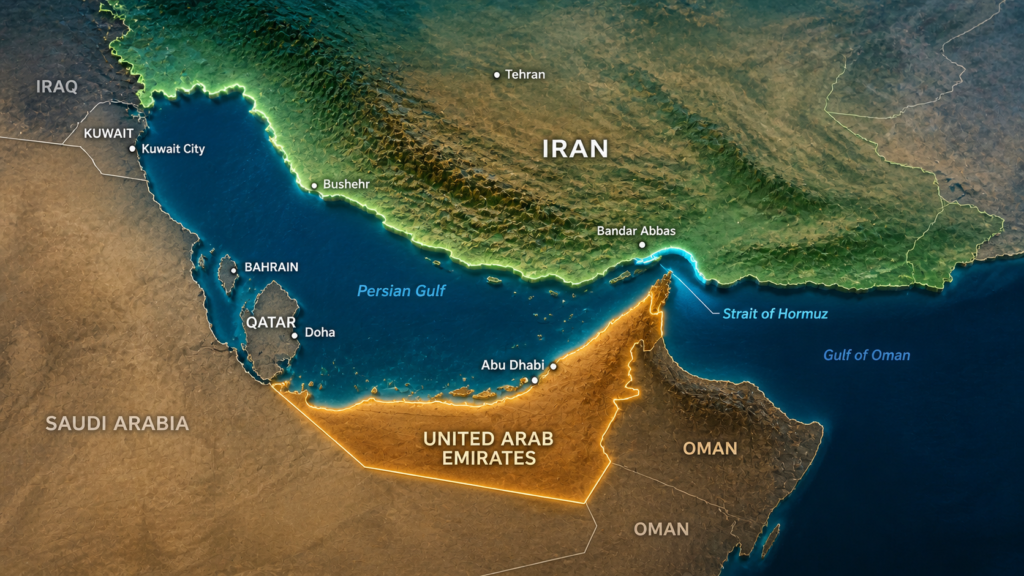
Iran and the UAE share a coastline separated by only a narrow stretch of water. Yet the relationship between these two neighbors couldn’t be more different from what geography might suggest. Threats, sanctions, proxy battles, and diplomatic standoffs have replaced cooperation and trade.
So — why is Iran targeting the UAE? Is it about religion? Oil? Power? Or something much deeper?
The answer is all of the above. This article breaks it all down in plain, easy-to-understand language — no political science degree required.
A Quick Look at the Two Countries
Before diving into the conflict, it helps to understand who these players are.
Iran is a large, ancient nation with a population of over 85 million. It’s an Islamic Republic governed by religious leaders — a system born from the 1979 revolution. Iran sees itself as the defender of Shia Muslims worldwide and a regional superpower.
The UAE (United Arab Emirates) is a federation of seven small emirates — including Dubai and Abu Dhabi. It’s wealthy, modern, and deeply connected to the West. It’s also home to a Sunni Muslim majority leadership and has strong ties with the United States and Israel.
These two countries represent two very different visions for the Middle East. That’s where the tension starts.
The Core Reasons Iran Targets the UAE
1. The UAE’s Alliance with the United States
Let’s be direct: Iran views any country allied with America as a potential threat.
The UAE hosts American military bases, conducts joint security operations with the U.S. Navy, and has long been a key partner in Washington’s Gulf strategy. From Iran’s perspective, this makes the UAE a forward post for American influence — right on Iran’s doorstep.
When the U.S. imposed severe economic sanctions on Iran, the UAE initially complied and cut down trade ties. Iran saw this as a direct betrayal by a neighbor who chose a foreign power over regional solidarity.
In short, the UAE’s close friendship with the U.S. makes it a symbolic and strategic target for Iran.
2. The Abraham Accords and Iran’s Worst Fear
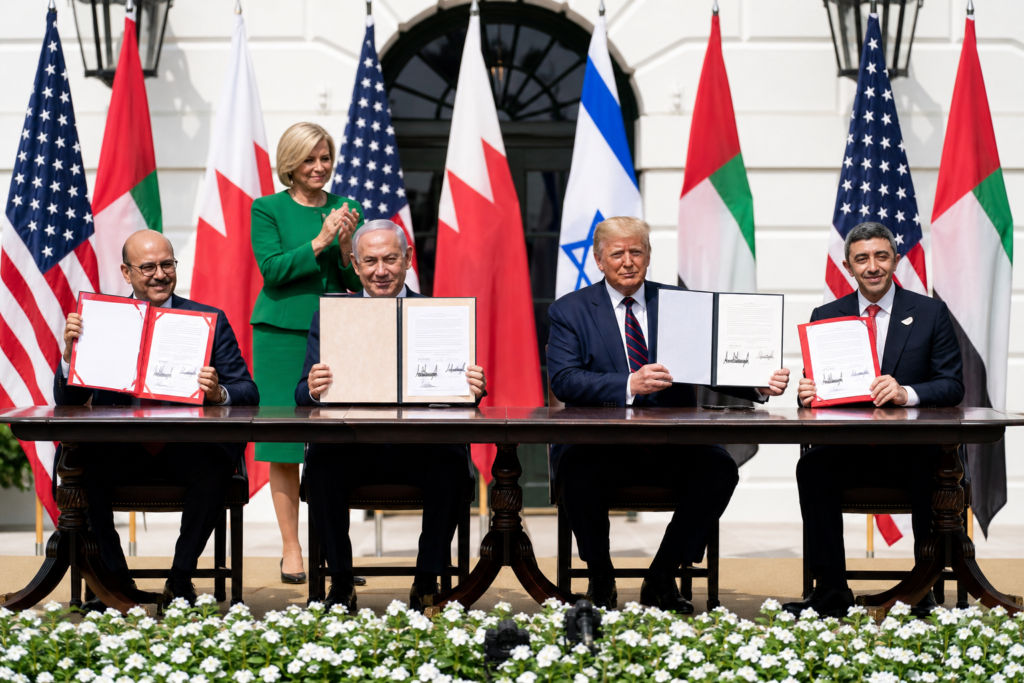
In 2020, the UAE signed the Abraham Accords — a normalization agreement with Israel brokered by the United States.
This was a political earthquake in the region.
Iran and Israel are bitter enemies. Tehran has repeatedly called for the destruction of the Israeli state and supports groups like Hezbollah and Hamas that openly oppose Israel. When the UAE chose to normalize relations with Israel, Iran felt encircled — an Arab neighbor had now openly joined what Iran considers a hostile bloc.
Since that moment, Iranian rhetoric toward the UAE has intensified. Iranian officials have accused the UAE of “betraying” the Palestinian cause and enabling Israel’s regional ambitions.
3. The Three Islands Dispute
Here’s a territorial conflict that most people outside the region don’t know about — but it matters enormously.
Three small islands sit in the strategic waters of the Persian Gulf: Abu Musa, Greater Tunb, and Lesser Tunb. Iran controls them all. The UAE claims they were illegally seized by Iran in 1971 — just as the UAE was being formed as a nation.
Iran disputes this entirely, insisting the islands are Iranian territory. The UAE disagrees.
These islands are not just patches of land. They sit near critical shipping lanes used to transport millions of barrels of oil every day. Whoever controls these islands has significant leverage over Gulf maritime traffic.
Every few years, this dispute flares up. It remains one of the most unresolved flashpoints between the two countries.
4. Iran’s Proxy War Strategy
Iran does not always act directly. It works through proxy groups — armed organizations that it funds, trains, and supports across the region.
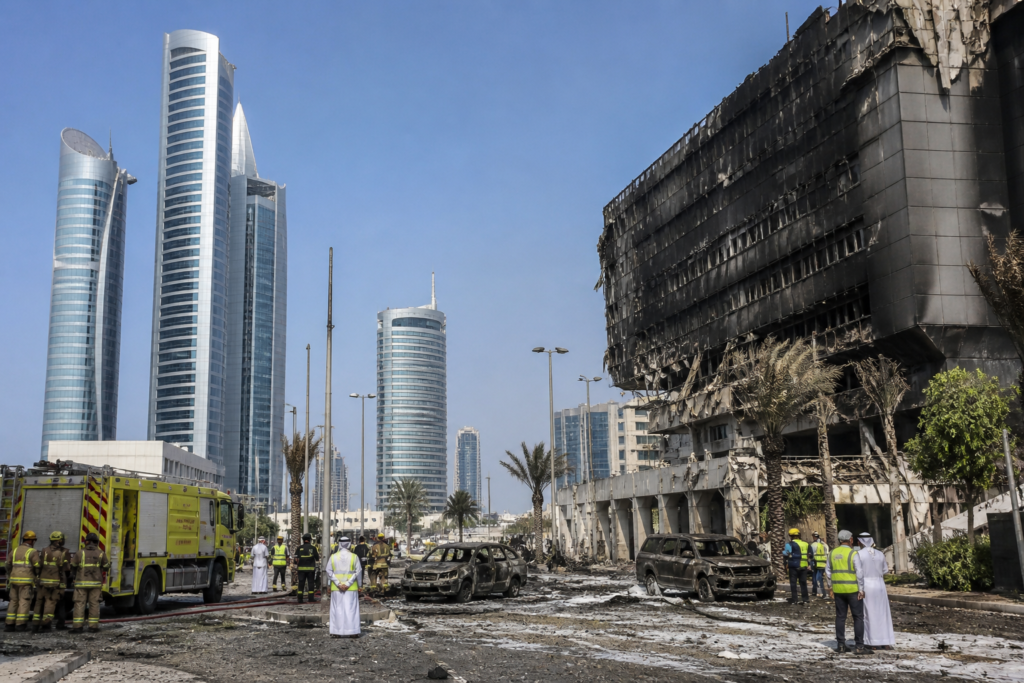
In Yemen, Iran backs the Houthi rebels. The Houthis have launched drone and missile strikes that have come perilously close to — and sometimes hit — UAE territory. In January 2022, Houthi drones struck inside Abu Dhabi, killing three people and causing an international uproar.
This was not an accident. Many analysts interpreted the Houthi attack on Abu Dhabi as a message from Iran: We can reach you.
The UAE is a key member of the Saudi-led coalition fighting the Houthis in Yemen. Iran, by supporting the Houthis, has an indirect but powerful way to pressure the UAE without triggering an all-out war.
5. Economic Competition and the Strait of Hormuz
The UAE has become one of the most powerful trading economies in the world. Dubai is a global financial hub. Abu Dhabi controls massive oil wealth. And the UAE has taken full advantage of Iran’s international isolation.
Much of the trade and investment that once flowed to Iran has been redirected to the UAE. Iranian businesspeople have even set up operations in Dubai to get around sanctions — a situation that Iran’s government officially resents even if some of its citizens benefit from it.
Meanwhile, Iran controls a large portion of the Strait of Hormuz — the narrow waterway through which nearly 20% of the world’s oil supply passes every day. Iran has repeatedly threatened to close the Strait during periods of tension, which would immediately devastate the UAE’s oil-dependent neighbors and disrupt global energy markets.
This gives Iran enormous leverage — and it knows it.
6. The Sunni vs. Shia Divide
Religion plays a real, if often overstated, role in this conflict.
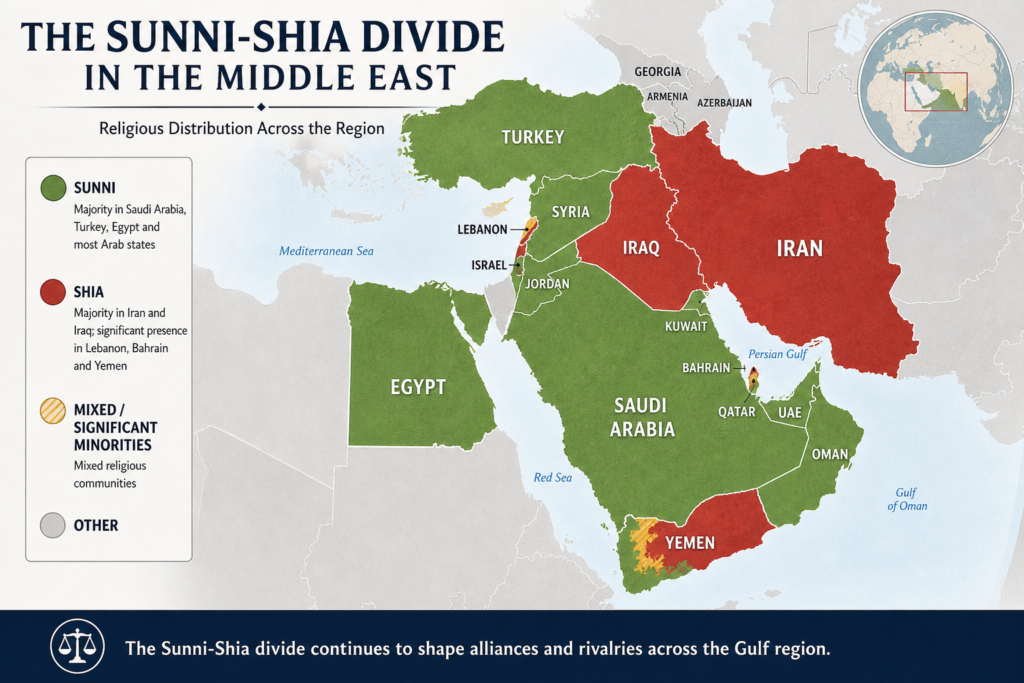
Iran is predominantly Shia Muslim. The UAE’s leadership is Sunni. This sectarian divide runs through much of the Middle East’s political conflicts — from Syria to Bahrain to Yemen.
Iran sees itself as the protector of Shia communities worldwide. The UAE has been a strong backer of Sunni governments. This religious dimension adds an ideological layer to what is fundamentally a political and strategic rivalry.
It doesn’t mean every Sunni Muslim opposes every Shia Muslim — that would be a gross oversimplification. But at the level of government policy and regional alliances, the Sunni-Shia split is often used to justify competing power blocs.
7. Iran’s Nuclear Program and Gulf Anxiety
Iran’s nuclear ambitions have sent shockwaves through every Gulf state — and the UAE is no exception.
A nuclear-armed Iran would fundamentally shift the balance of power in the region. The UAE, like Saudi Arabia, has been vocal about its concerns that a nuclear Iran would become even more aggressive and emboldened in its regional behavior.
The UAE has supported international pressure on Iran to limit its nuclear program. Iran, predictably, views this as yet another example of its Gulf neighbors siding with Western powers against Iranian interests.
The nuclear issue remains unresolved. As of 2024–2025, Iran’s enrichment capacity has grown significantly, increasing anxiety throughout the Gulf.
Recent Developments: Has Anything Changed?
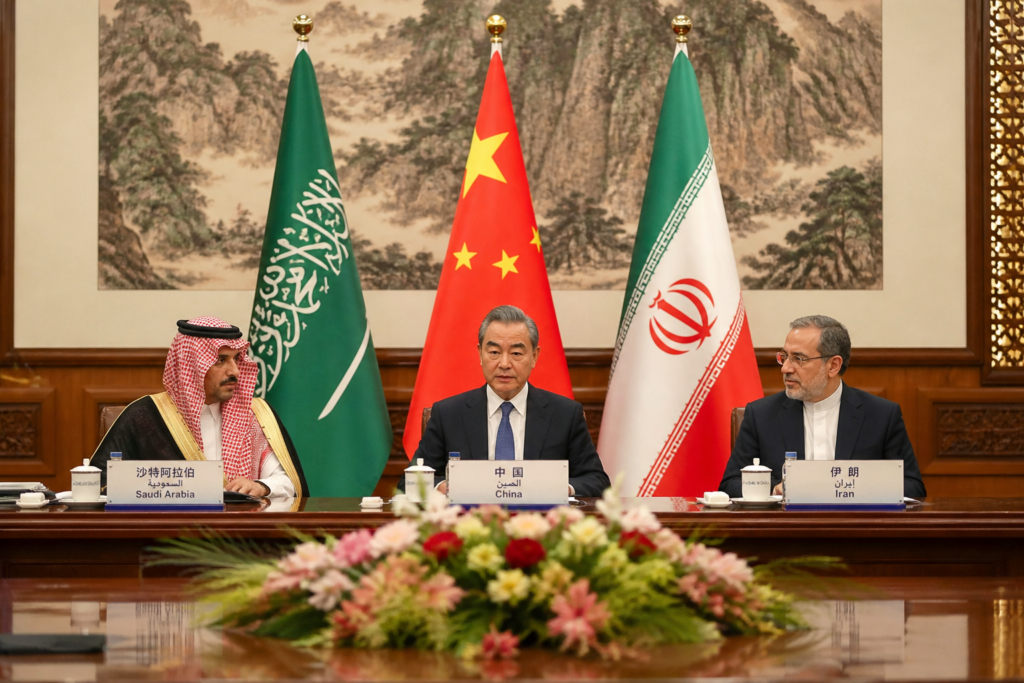
In 2023, there was a surprising diplomatic breakthrough: Iran and Saudi Arabia — Iran’s biggest rival in the region — agreed to restore diplomatic ties, with China playing the role of mediator.
This thaw did not immediately extend to the UAE, but it created new diplomatic space. Some trade channels between Iran and the UAE have reportedly reopened, and there have been quiet back-channel communications.
However, the fundamental issues — the islands dispute, Iran’s proxy activities, the Abraham Accords, and the nuclear standoff — remain unresolved.
Tensions can calm temporarily. But they rarely disappear.
Why This Matters to the Rest of the World
You might be wondering: why should someone outside the Gulf care about this?
Here’s the honest answer: the Persian Gulf fuels the global economy.
- Nearly 20% of the world’s oil passes through the Strait of Hormuz.
- Dubai handles over $500 billion in trade annually.
- Any military escalation in the Gulf directly impacts global energy prices, supply chains, and financial markets.
What happens between Iran and the UAE doesn’t stay in the Gulf. It ripples outward — affecting fuel prices, airline routes, insurance costs, and geopolitical alignments worldwide.
Internal Links
- 📖 Understanding the Middle East Conflict: A Beginner’s Guide
- 📖 What Are the Abraham Accords and Why Do They Matter?
- 📖 Iran’s Nuclear Program Explained Simply
- 📖 The Houthi Crisis in Yemen: What You Need to Know
External Links (High-Authority Sources)
- 🌐 Council on Foreign Relations – Iran’s Foreign Policy
- 🌐 BBC Middle East – Iran-UAE Relations
- 🌐 United Nations – Strait of Hormuz and Maritime Security
Frequently Asked Questions (FAQ)
Q1: Why does Iran threaten the UAE specifically?
The UAE’s alliance with the United States, its normalization of ties with Israel, and its role in supporting the coalition against Iran-backed Houthis in Yemen make it a key target for Iranian pressure. The unresolved islands dispute adds another layer of tension.
Q2: Has Iran ever attacked the UAE directly?
Iran has not carried out a direct military strike on UAE soil. However, Iran-backed Houthi rebels launched drone strikes inside Abu Dhabi in January 2022, killing three people. Many experts view this as an indirect Iranian message to the UAE.
Q3: What are the three disputed islands between Iran and UAE?
The three islands are Abu Musa, Greater Tunb, and Lesser Tunb. Iran seized control of them in 1971. The UAE claims they are illegally occupied Emirati territory. Iran insists they have always been Iranian.
Q4: Could Iran and UAE go to war?
A full-scale war between Iran and the UAE is considered unlikely but not impossible. Both sides have reasons to avoid direct conflict — Iran is under heavy sanctions, and the UAE relies on stability for its economy. However, proxy conflicts and incidents in the Gulf remain a real risk.
Q5: How does the UAE protect itself from Iran?
The UAE hosts American military assets, including the Al Dhafra Air Base. It has invested heavily in advanced missile defense systems. It is also part of regional security agreements with Saudi Arabia and other Gulf Cooperation Council (GCC) states.
Conclusion
The tension between Iran and the UAE is not a simple story with one villain and one victim. It’s a complex web of history, religion, oil, power, and competing visions for the future of the Middle East.
Iran sees the UAE as a Westernized state that has chosen American and Israeli alliances over Arab and Muslim solidarity. The UAE sees Iran as a destabilizing force that supports armed proxies, threatens maritime routes, and pursues nuclear ambitions that put the entire Gulf at risk.
Both sides have legitimate concerns. Both have made choices that inflamed the other. And both continue to navigate one of the most volatile neighborhoods on earth.
What’s clear is this: the Persian Gulf is too important — economically, strategically, and politically — for this conflict to stay a regional issue. It touches all of us.
Want to stay informed about Middle East geopolitics? Explore more articles on our site for clear, jargon-free coverage of global affairs that actually affect your world.