

Introduction — A Crisis That Could Reshape the Global Economy
A sudden escalation in tensions across the Middle East is once again sending shockwaves through the global economy. Energy markets are reacting sharply, governments are issuing emergency policy statements, and businesses are preparing for potential disruptions.
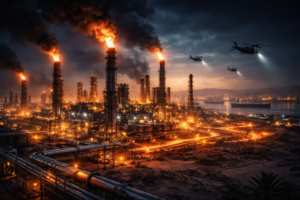
At the center of the unfolding crisis lies a critical reality: the Middle East remains the world’s most strategically important oil-producing region. Any instability here has immediate consequences for global fuel supply, transportation costs, inflation, and economic growth.
As military activity intensifies and shipping routes face renewed threats, the world is watching closely. The Middle East conflict and the emerging global oil crisis are no longer regional issues — they are shaping economic decisions, political alliances, and daily life across continents.
Background & Timeline of Events
The Strategic Importance of the Middle East
For decades, the Middle East has played a dominant role in global energy supply. Countries such as Saudi Arabia, Iran, Iraq, Kuwait, and the United Arab Emirates collectively control a large share of the world’s proven oil reserves.
Key maritime routes like the Strait of Hormuz serve as lifelines for global energy trade. Approximately one-fifth of the world’s oil supply passes through this narrow waterway each day. Any disruption here can rapidly influence global markets.
Rising Geopolitical Tensions
The current escalation did not emerge overnight. It follows years of:
- Political rivalries between regional powers
- Proxy conflicts and military build-ups
- Sanctions affecting oil exports
- Disputes over nuclear programs and security alliances
Recent military incidents, threats to energy infrastructure, and warnings to shipping operators have heightened fears of supply interruptions.
Early Market Signals
Even before major disruptions occurred, energy traders began pricing in geopolitical risk. Oil futures showed increased volatility, and strategic reserves discussions resurfaced in several major economies.
Latest Developments — Current Situation on the Ground
In recent weeks, reports of targeted strikes near energy facilities and heightened naval presence in key waterways have intensified concerns.
Shipping companies are reassessing risk levels in major transit zones. Insurance costs for tankers have risen sharply, reflecting fears of potential attacks or blockades.
Governments across Europe, Asia, and North America have responded by:
- Reviewing emergency fuel reserves
- Coordinating diplomatic outreach
- Monitoring domestic fuel price stability
- Advising citizens and businesses to prepare for volatility
Energy companies are also evaluating contingency plans, including rerouting shipments and diversifying supply sources.
Financial markets have reacted quickly. Energy stocks are experiencing significant swings, while transportation and manufacturing sectors are facing renewed cost pressures.
Global Impact — Economy, Politics, Society, Technology & Environment
Economic Impact: Inflation Risks and Growth Concerns
The most immediate global consequence of the Middle East conflict is rising oil prices.
Higher fuel costs influence:
- Transportation and logistics expenses
- Food production and distribution
- Manufacturing input prices
- Airline ticket and shipping rates
Economists warn that prolonged disruptions could trigger:
- Global inflation spikes
- Slower economic growth
- Increased interest rate pressures
- Currency volatility in emerging markets
Developing nations are particularly vulnerable, as they often rely heavily on energy imports and have limited fiscal capacity to absorb price shocks.
Political Impact: Shifting Alliances and Strategic Decisions
Energy crises often reshape global diplomacy.
Countries are accelerating negotiations on:
- New energy supply agreements
- Military cooperation frameworks
- Strategic stockpile coordination
- Trade policy adjustments
Some governments are also reassessing their long-term dependence on Middle Eastern oil, strengthening partnerships with alternative suppliers in Africa, the Americas, and Central Asia.
Social Impact: Everyday Costs for Ordinary People
For millions of households worldwide, the crisis translates into higher living expenses.
Common effects include:
- Increased fuel prices at the pump
- Higher electricity bills
- Rising food and transport costs
- Pressure on wages and savings
In many urban areas, public dissatisfaction tends to grow when energy costs surge, creating additional political challenges for policymakers.
Technological Impact: Accelerating the Energy Transition
Ironically, geopolitical instability often accelerates investment in renewable energy and energy efficiency technologies.
Governments and corporations are expanding focus on:
- Solar and wind power infrastructure
- Electric vehicle adoption
- Battery storage innovation
- Smart grid development
The current crisis may act as a catalyst for faster global energy diversification strategies.
Environmental Impact: A Complicated Balance
Higher oil prices sometimes reduce consumption in the short term. However, supply disruptions can also lead to increased reliance on coal or less efficient fuels in some regions.
Environmental analysts warn that emergency energy decisions may temporarily slow climate progress if countries prioritize stability over sustainability.
Expert Opinions & Market Reactions
Energy analysts describe the situation as one of the most unpredictable geopolitical risk environments in recent years.
Key observations from market experts include:
- Oil price volatility could persist for months
- Strategic petroleum reserves may be released if shortages worsen
- Central banks may adjust monetary policies in response to inflation risks
- Investors are shifting toward safe-haven assets
Stock markets are showing sector-specific reactions:
Gaining sectors:
- Energy producers
- Defense companies
- Commodity traders
Under pressure:
- Airlines and logistics firms
- Manufacturing exporters
- Tourism-dependent economies
Financial institutions are advising clients to prepare for sustained uncertainty rather than short-term turbulence.
What Could Happen Next — Future Outlook & Scenarios
The future trajectory of the Middle East conflict and global oil crisis depends on several critical factors.
Scenario 1: Diplomatic De-escalation
If negotiations succeed, tensions may ease, allowing shipping routes and energy infrastructure to operate normally.
Possible outcomes:
- Stabilized oil prices
- Recovery in global markets
- Reduced inflation pressure
- Renewed investor confidence
Scenario 2: Prolonged Regional Instability
Continued clashes or infrastructure disruptions could lead to:
- Sustained high energy prices
- Slower global economic growth
- Increased geopolitical polarization
- Accelerated energy diversification policies
Scenario 3: Major Supply Shock
In the worst-case scenario, a large-scale disruption in oil exports could trigger:
- Emergency fuel rationing in some countries
- Severe recession risks
- Rapid policy interventions by central banks and governments
- Structural changes in global trade patterns
Regardless of which scenario unfolds, the crisis is likely to influence global economic strategies for years to come.
Conclusion — A Defining Moment for Global Energy Security
The escalating Middle East conflict and emerging global oil crisis highlight how deeply interconnected today’s world has become. A single regional crisis can influence inflation rates, government policies, market stability, and everyday living costs across continents.
As nations navigate uncertainty, the situation also presents an opportunity to rethink energy security, diversify supply chains, and accelerate the transition toward more sustainable energy systems.
The coming months will be crucial in determining whether diplomacy prevails or volatility intensifies.
In an era defined by rapid change and geopolitical complexity, staying informed is not just important — it is essential.
Stay connected with NewWorldUpdates for accurate global insights, expert analysis, and real-time coverage of the stories shaping our world.
1 thought on “Middle East Conflict & Global Oil Crisis 2026”