
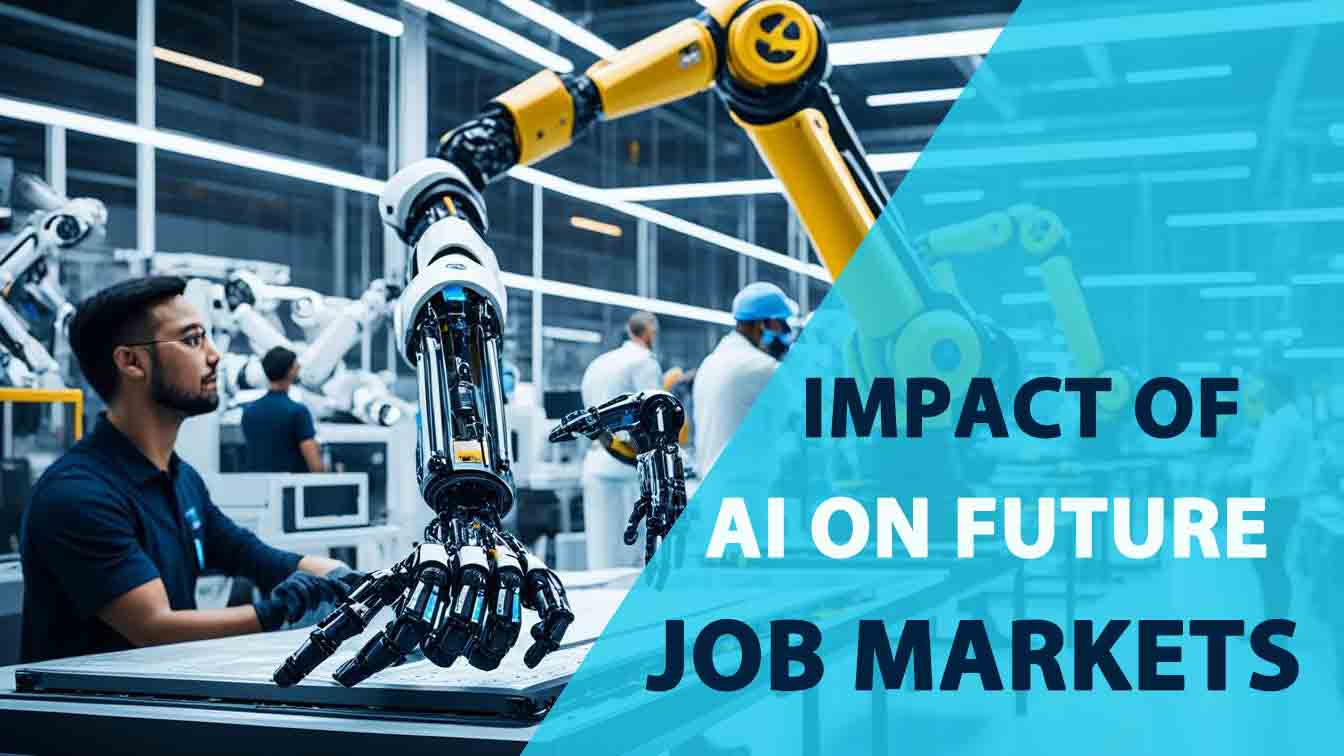
Introduction
Artificial Intelligence (AI) is no longer a futuristic concept. It is now reshaping industries, redefining job roles, and transforming how companies operate worldwide. From automation tools to advanced language models developed by organizations like OpenAI, AI technologies are rapidly influencing business strategies and workforce structures.
In 2026, the AI impact on jobs and businesses is one of the most searched and discussed economic topics globally. This article explores how AI affects employment, business growth, productivity, risks, and long-term opportunities.
What Is Artificial Intelligence in Business?
Artificial Intelligence refers to computer systems that can perform tasks normally requiring human intelligence, such as:
- Data analysis
- Language understanding
- Image recognition
- Decision-making
- Automation of repetitive tasks
Businesses use AI to improve efficiency, reduce costs, and enhance customer experiences.
How AI Is Changing Jobs
1. Automation of Repetitive Tasks
AI systems can automate repetitive and rule-based work such as:
- Data entry
- Customer support chat handling
- Inventory management
- Basic accounting processes
This reduces the need for manual labor in certain roles but increases efficiency.
2. Job Displacement Concerns
One of the biggest concerns is job replacement. Roles that involve predictable tasks are more vulnerable, including:
- Administrative assistants
- Telemarketing agents
- Basic customer service representatives
- Manufacturing line workers
However, AI does not eliminate all jobs — it transforms many of them.
3. Creation of New Career Opportunities
While AI replaces some roles, it also creates new ones, such as:
- AI engineers
- Data scientists
- Machine learning specialists
- AI ethics consultants
- Automation managers
Demand for digital and technical skills is increasing significantly.
AI Impact on Different Industries
Technology Sector
Tech companies use AI to build smarter software, cybersecurity tools, and automation platforms. AI development itself has become a major employment sector.
Healthcare Industry
AI helps in:
- Medical diagnosis assistance
- Predictive analytics
- Drug discovery
- Robotic surgery support
Rather than replacing doctors, AI supports faster and more accurate decision-making.
Finance & Banking
Financial institutions use AI for:
- Fraud detection
- Risk analysis
- Algorithmic trading
- Customer behavior prediction
AI improves accuracy while reducing operational costs.
Retail & E-commerce
Retail businesses use AI for:
- Personalized recommendations
- Demand forecasting
- Automated chatbots
- Supply chain optimization
This enhances customer satisfaction and profitability.
Benefits of AI for Businesses
Increased Productivity
AI systems operate 24/7 without fatigue, improving operational efficiency.
Cost Reduction
Automation reduces labor costs and human error.
Better Decision-Making
AI analyzes large datasets quickly, providing data-driven insights.
Competitive Advantage
Companies adopting AI early gain faster innovation and improved market positioning.
Risks and Challenges
Skill Gap
Many workers lack the technical skills required in an AI-driven workplace.
Ethical Concerns
AI systems raise issues such as:
- Data privacy
- Algorithm bias
- Surveillance concerns
Job Inequality
High-skill workers benefit more from AI growth, while low-skill workers may face displacement.
The Future of Work in the AI Era
The future workplace will likely combine:
- Human creativity
- Emotional intelligence
- AI-powered automation
Rather than full replacement, most experts predict collaboration between humans and machines.
Employees who adapt, reskill, and learn digital tools will remain competitive.
How Businesses Should Prepare
Invest in Workforce Training
Upskilling employees in digital literacy and AI tools is critical.
Adopt Responsible AI Policies
Clear guidelines for ethical AI usage build trust and sustainability.
Focus on Human Skills
Skills such as leadership, creativity, problem-solving, and emotional intelligence cannot be easily automated.
How Workers Can Stay Relevant
- Learn AI-related tools
- Improve technical knowledge
- Develop soft skills
- Stay updated with industry trends
- Consider digital certifications
Continuous learning is essential in the AI-driven economy.
Conclusion
The AI impact on jobs and businesses is both transformative and complex. While automation may replace certain routine roles, it also creates new career paths and improves productivity across industries.
The key to success in 2026 and beyond lies in adaptation. Businesses must embrace innovation responsibly, and individuals must invest in skill development to remain competitive in an AI-powered world.
Artificial Intelligence is not just changing how we work — it is redefining the future of the global economy.