
Introduction
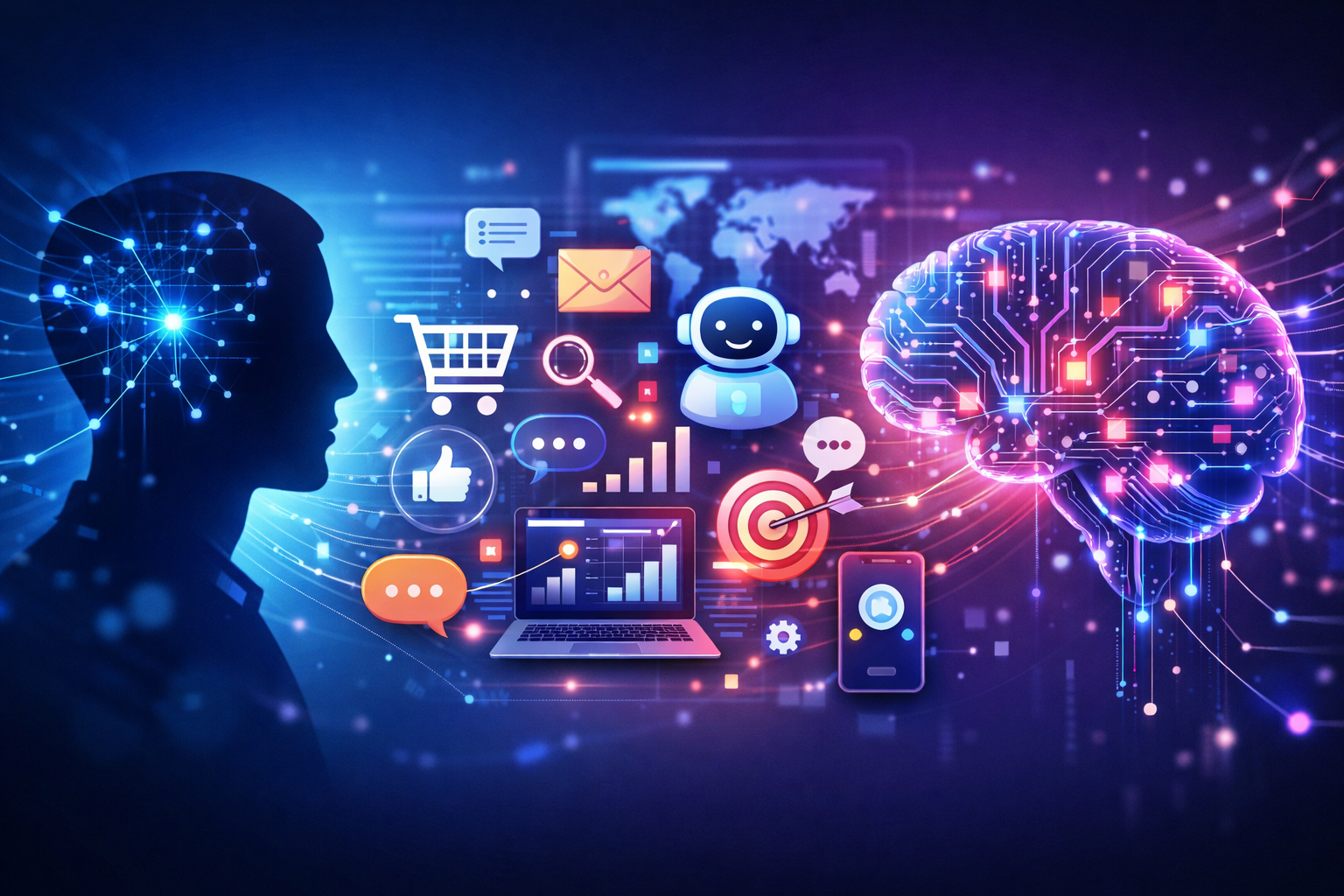
AI marketing has become one of the most powerful forces shaping the digital world. What once sounded futuristic is now part of everyday life—personalized ads, smart recommendations, automated emails, and AI chatbots are everywhere. Businesses across the globe are using artificial intelligence in marketing to understand customers better, improve engagement, and make faster decisions.
This article explains AI marketing, how it is changing daily life, the key content areas, and a step-by-step process showing how AI is used in modern marketing strategies.
What Is AI Marketing?
AI marketing refers to the use of artificial intelligence technologies, including machine learning, data analytics, and automation, to improve marketing performance. It helps marketers analyze large volumes of data, predict customer behavior, and deliver personalized experiences at the right time.
In simple terms, AI marketing allows businesses to market smarter, not harder.
How AI Marketing Is Changing Our Daily Life
AI-powered marketing is already embedded in everyday digital activities.
Personalized Digital Experience
Search engines, social media platforms, and websites use AI to show content based on user interests, behavior, and location.
Smarter Online Shopping
E-commerce platforms rely on AI marketing tools to recommend products, predict demand, and offer personalized discounts.
Social Media & Advertising
AI decides which ads, videos, and posts appear in user feeds, making marketing more relevant and engaging.
Voice Search & Virtual Assistants
Voice assistants use AI to answer queries instantly, changing how people search and how brands optimize content.
Why AI Marketing Is Important Today
AI marketing has become essential for modern businesses because it:
- Improves customer targeting and personalization
- Automates repetitive marketing tasks
- Saves time and operational costs
- Provides real-time performance insights
- Increases conversion and engagement rates
Key Content Areas in AI Marketing
Successful AI-powered marketing strategies focus on the following areas:
Data Collection and Management
AI gathers data from websites, apps, emails, social media, and CRM systems.
Audience Segmentation
Artificial intelligence divides users into segments based on behavior, interests, demographics, and activity patterns.
Content Personalization
AI delivers personalized emails, ads, landing pages, and recommendations to individual users.
Predictive Analytics
AI predicts future customer actions, trends, and campaign outcomes using historical data.
Marketing Automation
AI automates campaigns, ad bidding, email scheduling, and customer interactions.
How AI Is Used in Marketing (Step-by-Step Process)
Step 1: Data Collection
AI marketing systems collect data from user interactions across digital platforms such as websites, apps, and social media.
Step 2: Data Analysis
Machine learning algorithms analyze patterns, preferences, and behaviors within the collected data.
Step 3: Audience Segmentation
AI groups users into targeted segments based on interests, buying behavior, and engagement level.
Step 4: Content Creation and Optimization
AI assists in creating headlines, ad copy, visuals, and optimizing content for better performance.
Step 5: Campaign Execution
AI-powered tools automatically launch campaigns across search engines, social media, and email platforms.
Step 6: Performance Tracking
AI monitors clicks, conversions, engagement, and ROI in real time.
Step 7: Continuous Improvement
AI learns from campaign results and improves future marketing strategies without manual effort.
Real-Life Examples of AI Marketing
- Personalized product recommendations on e-commerce sites
- AI chatbots offering 24/7 customer support
- Smart email subject lines and send-time optimization
- Automated social media ad targeting
- Dynamic pricing based on demand and behavior
Benefits of AI Marketing
AI marketing offers several advantages:
- Higher efficiency and accuracy
- Better customer understanding
- Improved marketing ROI
- Faster decision-making
- Stronger brand loyalty
Challenges of AI Marketing
Despite its advantages, AI marketing also faces challenges:
- Data privacy and security concerns
- Dependence on high-quality data
- High setup and implementation costs
- Need for skilled AI professionals
Future of AI Marketing
The future of AI marketing includes advanced automation, real-time personalization, voice-search optimization, and emotion-based AI. As competition increases, businesses adopting AI-driven marketing strategies early will gain a strong advantage.
Conclusion
AI marketing is transforming both daily life and modern marketing practices. From personalized digital experiences to automated campaigns, artificial intelligence in marketing helps businesses connect with customers more effectively. As technology continues to evolve, AI marketing will play an even bigger role in shaping the digital future.