
Introduction: Why Remote Jobs Are Dominating the Future of Work
The global workforce is undergoing one of the biggest transformations in modern economic history. Remote work is no longer a temporary trend or pandemic-driven shift — it has become a long-term structural change in how businesses operate and how professionals build careers.
In 2026, companies are prioritizing cost efficiency, global talent access, automation, digital collaboration, and flexible work culture. At the same time, employees are demanding better work-life balance, location independence, and new income opportunities.
As artificial intelligence, cloud computing, and remote collaboration tools continue to evolve, traditional office roles are rapidly being replaced by remote-first job models. According to global labor market forecasts, over 35% of professional roles may become fully remote or hybrid by 2030.
This article explores the Top 10 Remote Jobs that are set to replace traditional office-based careers, along with market insights, future trends, opportunities, and challenges shaping the future of work.
Market Overview: The Remote Work Economy
The remote work economy has grown into a multi-trillion-dollar ecosystem driven by digital platforms, freelancing marketplaces, remote hiring solutions, and AI productivity tools.
Key Market Drivers
- Growth of digital transformation across industries
- Adoption of automation and AI-based workflows
- Rise of freelancing and gig economy platforms
- Increasing real estate and operational costs for businesses
- Global competition for skilled professionals
Industry Statistics (2026 Trends)
- Over 70% of tech companies now offer remote or hybrid roles
- Freelancing workforce expected to reach 1 billion professionals globally by 2030
- Companies can reduce operational costs by 25–40% through remote hiring
Key Trends Driving Remote Job Growth
1. AI-Powered Productivity
Automation tools are enabling individuals to manage tasks that previously required full office teams.
2. Borderless Hiring
Businesses are hiring talent from emerging markets, reducing dependency on local office workers.
3. Cloud-Based Work Infrastructure
Collaboration platforms, cybersecurity solutions, and SaaS tools are enabling secure remote workflows.
4. Outcome-Based Employment
Companies are shifting from fixed working hours to performance-driven remote contracts.
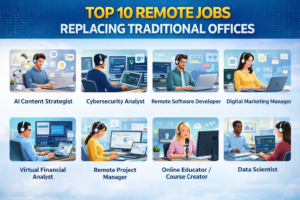
Top 10 Remote Jobs That Will Replace Traditional Offices
1. AI Content Strategist
With the explosion of AI-generated content, businesses need professionals who can manage content strategy, brand voice, and SEO optimization remotely.
Key Skills:
- SEO strategy
- AI tool management
- Content analytics
- Digital marketing
Future Outlook: Demand expected to grow significantly as online businesses expand globally.
2. Cybersecurity Analyst
As companies move operations online, cybersecurity threats are increasing. Remote cybersecurity professionals are now essential.
Responsibilities:
- Threat monitoring
- Data protection
- Network security audits
Market Demand: High demand due to rising cybercrime and regulatory compliance requirements.
3. Remote Software Developer
Software development has become one of the most flexible remote careers globally.
Popular Specializations:
- Cloud engineering
- AI development
- Mobile applications
- Blockchain solutions
Salary Outlook: Among the highest-paying remote careers.
4. Digital Marketing Manager
Brands need remote marketing experts to manage campaigns, performance analytics, and customer acquisition strategies.
Key Roles Include:
- Social media strategy
- PPC campaign management
- Email marketing automation
- Growth hacking
5. Virtual Financial Analyst
Remote financial professionals now help companies with forecasting, budgeting, investment analysis, and risk management.
Industry Growth: FinTech adoption is driving demand for virtual finance experts.
6. Remote Project Manager
Organizations with distributed teams require skilled remote project managers to ensure workflow efficiency.
Tools Used:
- Agile frameworks
- Task automation platforms
- Collaboration dashboards
7. UX/UI Designer
User experience has become a major competitive advantage for digital products.
Why Remote Works:
- Design tools are cloud-based
- Global client opportunities
- High freelancing demand
8. Online Educator / Course Creator
Digital education platforms are transforming traditional teaching careers.
Opportunities Include:
- Professional skill training
- Language coaching
- Tech certifications
Market Forecast: EdTech sector expected to grow rapidly through 2030.
9. Data Analyst / Data Scientist
Data-driven decision-making is becoming essential for businesses.
Key Tasks:
- Predictive analytics
- Dashboard reporting
- Market trend analysis
Future Demand: Strong growth across healthcare, finance, and e-commerce sectors.
10. Remote Customer Success Manager
Customer retention is now a strategic priority. Remote professionals handle onboarding, support, and engagement.
Benefits for Companies:
- 24/7 global support
- Lower infrastructure costs
- Higher customer satisfaction
Opportunities in the Remote Job Economy
- Global income opportunities for professionals
- Reduced commuting costs and improved productivity
- Increased entrepreneurship and freelancing
- Expansion of digital business ecosystems
Challenges and Risks
- Cybersecurity vulnerabilities
- Communication barriers across time zones
- Job market competition
- Work-life balance management
- Performance monitoring complexities
Future Outlook (2026–2030 Predictions)
- Hybrid offices will become experience hubs rather than daily workplaces
- AI will automate administrative office roles
- Remote leadership and digital management skills will become essential
- Emerging markets will dominate global remote hiring
- Digital nomad policies will expand worldwide
Impact on Businesses and Consumers
For Businesses
- Reduced real estate and operational expenses
- Access to global talent pools
- Faster scalability and innovation
For Workers
- Greater flexibility and income diversification
- Skill-based employment replacing degree-based hiring
- More entrepreneurial career paths
SEO FAQs
1. Which remote jobs are most in demand in 2026?
Remote software development, cybersecurity, digital marketing, and data analytics roles are among the fastest-growing careers.
2. Will remote work replace traditional offices completely?
Not entirely. Hybrid work models are expected to dominate the future workforce.
3. Are remote jobs high paying?
Yes, many remote tech and finance roles offer competitive global salaries.
4. What skills are needed for remote careers?
Digital communication, time management, technical expertise, and adaptability are essential.
5. How can beginners start a remote career?
Learning digital skills, freelancing, online certifications, and building portfolios are effective starting points.
Conclusion
Remote work is not just a trend — it is redefining the global employment landscape. As businesses embrace automation, digital collaboration, and global hiring strategies, traditional office roles will continue to decline.
Professionals who adapt to remote skills, embrace continuous learning, and leverage digital platforms will thrive in this evolving economy.
Stay informed about the latest business, technology, energy, and global workforce trends by following Newworldupdates — your trusted source for future-focused insights.