
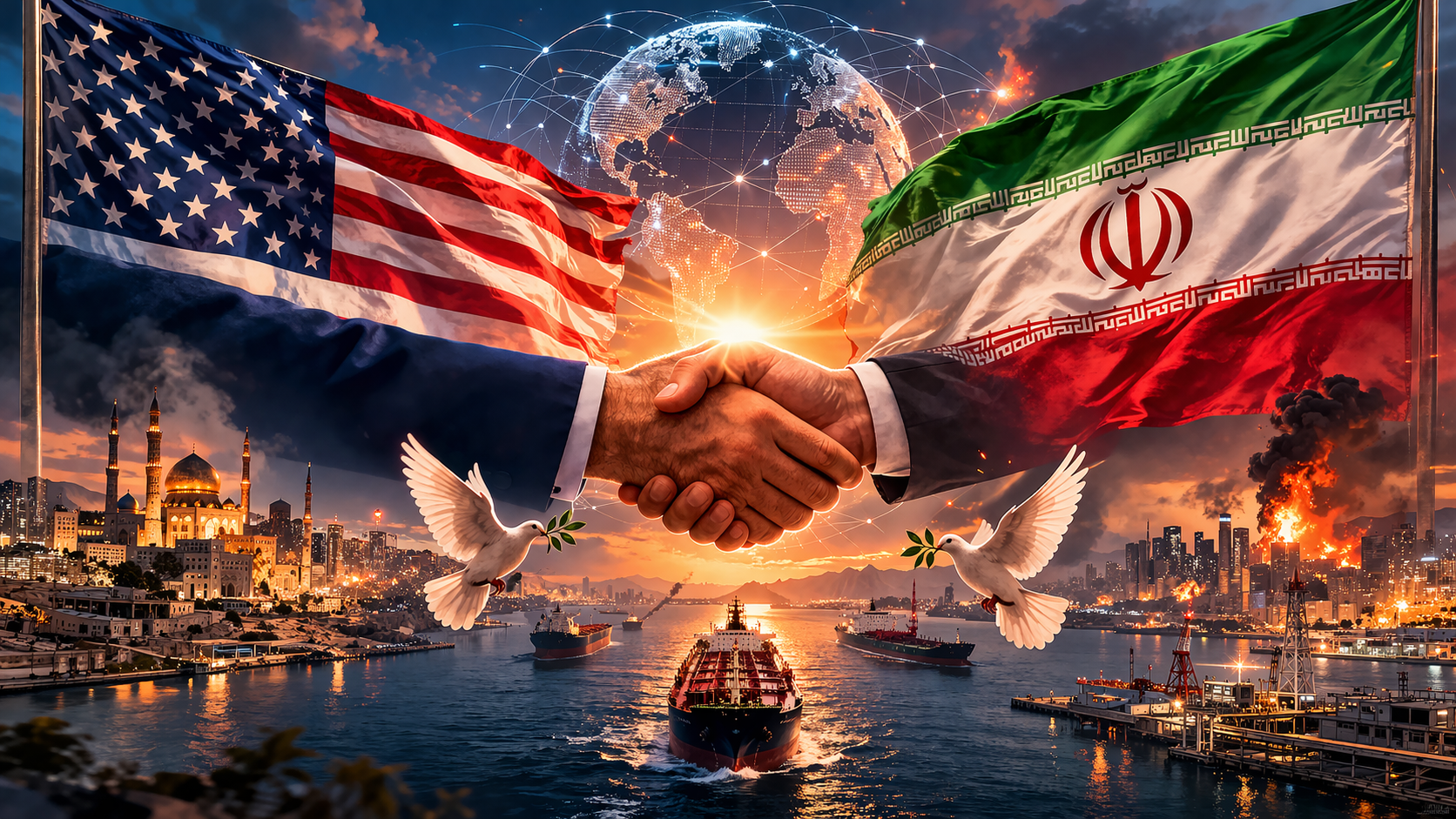
As the world stood dangerously close to another major geopolitical conflict, a sudden diplomatic breakthrough has shifted the narrative—at least for now. The United States and Iran have agreed to a two-week ceasefire following days of escalating tensions that had alarmed global leaders, disrupted markets, and raised fears of a wider war in the Middle East.
This temporary truce is more than just a pause in hostilities—it’s a crucial window for diplomacy, economic stabilization, and potential long-term peace negotiations. But how did things reach this point, and what does this ceasefire really mean for the world?
What Led to the Ceasefire?
In recent weeks, tensions between the United States and Iran intensified sharply due to military posturing, regional proxy conflicts, and threats to critical trade routes. Both nations appeared to be edging closer to direct confrontation, raising concerns of a full-scale conflict that could destabilize the entire region.
Behind the scenes, diplomatic channels remained active. A key role was played by Pakistan, which acted as a mediator, facilitating communication and helping both sides step back from the brink. This intervention proved crucial in securing a temporary agreement and preventing immediate escalation.
Key Terms of the Ceasefire
The agreement between the two nations includes several important conditions:
- Duration: A strictly defined two-week ceasefire
- Military Pause: Both sides have agreed to halt direct and indirect military actions
- Strategic Stability: Conditional measures, including easing tensions around the Strait of Hormuz, a vital global oil route
- Diplomatic Engagement: Continued talks during the ceasefire period
This agreement is not a peace deal—but a temporary pause designed to create space for dialogue.
Global Impact & Reactions
The international community has responded with cautious optimism. European leaders, along with major global powers, have welcomed the ceasefire as a positive step toward de-escalation.
For many nations, this agreement is critical. A conflict between the United States and Iran would not only impact the Middle East but also disrupt global trade, energy supplies, and international security. The ceasefire is seen as a chance to stabilize a rapidly deteriorating situation and push for diplomatic solutions.
Impact on Oil Prices & Global Economy
One of the most immediate effects of the ceasefire has been seen in global oil markets.
The Middle East—especially the Strait of Hormuz—is a key artery for global oil supply. Any threat to this route typically causes oil prices to surge. However, following the ceasefire announcement:
- Oil prices showed signs of decline
- Global stock markets reacted positively
- Investor confidence improved slightly
Lower oil prices can have a ripple effect, reducing fuel costs worldwide and easing inflationary pressures in many economies. For countries heavily dependent on energy imports, this development brings temporary relief.
Role of Pakistan in Mediation
A significant yet often overlooked aspect of this ceasefire is the diplomatic role played by Pakistan.
Leveraging its strategic relationships and regional influence, Pakistan helped facilitate dialogue between the two adversaries. This positions the country as an important diplomatic player in global conflict resolution, particularly within the Middle East context.
The success of this mediation also highlights the growing importance of regional actors in preventing large-scale conflicts.
Risks & Ongoing Uncertainty
Despite the positive developments, it’s important to remain realistic—this is only a temporary ceasefire, not a permanent solution.
Key risks include:
- Deep-rooted political and ideological differences remain unresolved
- Any violation during the two-week period could reignite tensions
- Proxy conflicts in the region may continue indirectly
The situation remains fragile, and the possibility of escalation still exists if negotiations fail.
What Happens Next?
The next two weeks will be critical. Diplomatic efforts are expected to intensify, with potential follow-up talks possibly taking place in Islamabad.
Key questions moving forward:
- Can both sides agree on longer-term de-escalation measures?
- Will this ceasefire evolve into a broader peace agreement?
- How will regional powers influence the outcome?
While there is hope, the path to lasting peace remains uncertain.
Final Thoughts
The Iran–US two-week ceasefire is a significant moment in global politics—one that offers both relief and a stark reminder of how close the world came to another major conflict.
For now, diplomacy has prevailed over confrontation. But whether this fragile peace holds—or collapses—will depend on what happens next behind closed doors.
” If you want to know more you can see here : Global Economic crisis 2026 “