
By a Geopolitical Correspondent | Updated May 8, 2026 / Newworldupdates
Introduction: A Conflict That Is Reshaping the World Order
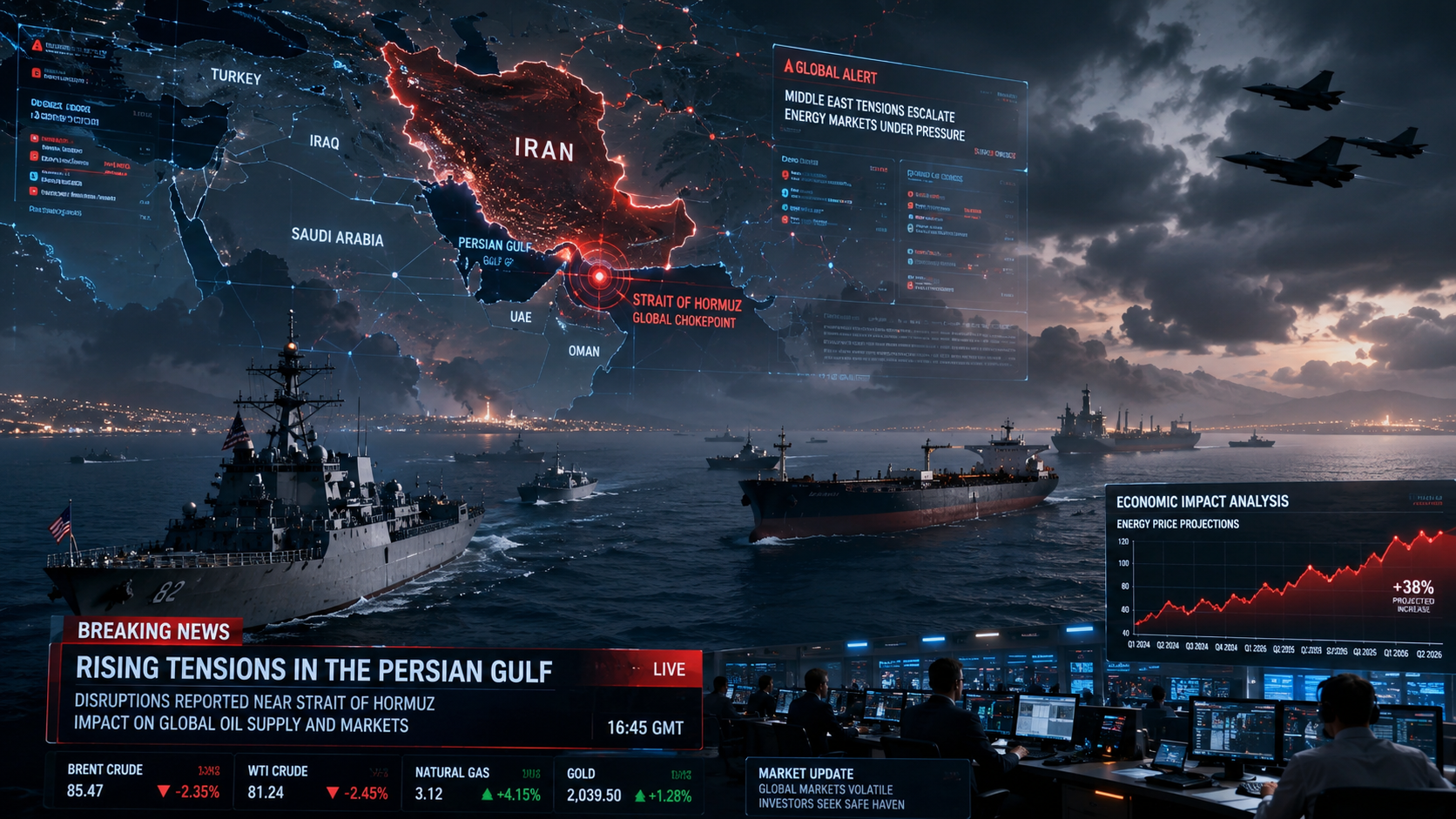
Few events in recent history have shaken the foundations of global security, energy markets, and diplomatic order as swiftly as the 2026 Iran war. Since late February, when the United States and Israel launched coordinated airstrikes against Iran’s military and government infrastructure, the Middle East has been drawn into one of its most dangerous confrontations in decades. The conflict has dominated global headlines not simply because of its military scale, but because of what it threatens: the stability of energy supplies, the integrity of critical shipping lanes, and the fragile balance of power across an already volatile region.
For millions of people around the world — from commuters paying higher fuel costs in New York to families facing food shortages in the Gulf — the war’s consequences are no longer abstract. They are immediate, real, and deepening by the day. Understanding what is happening, who is involved, and where things might be heading is no longer just a concern for policymakers. It matters to everyone.
Latest Iran War Developments
The conflict began on February 28, 2026, when the United States and Israel launched surprise airstrikes targeting Iranian military bases, government buildings, and high-ranking officials — including Supreme Leader Ali Khamenei, who was killed in the initial strikes. The attacks came while nuclear negotiations between Washington and Tehran were still nominally ongoing, which drew widespread international condemnation regarding timing and diplomatic process.
Iran responded with hundreds of ballistic missiles and drones directed at Israeli territory, U.S. military installations across the region, and neighboring Arab nations including Bahrain, Kuwait, Qatar, Saudi Arabia, and the UAE. Critically, Tehran also moved to close the Strait of Hormuz on March 4 — a decision that immediately sent shockwaves through the global energy market.
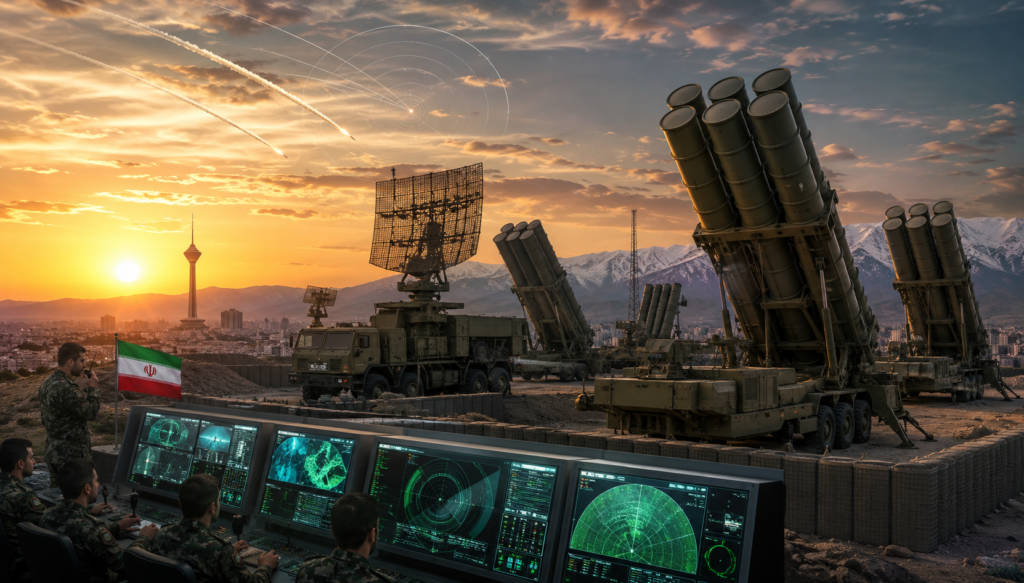
As of early May 2026, the conflict has entered a tense, fragile phase. Secretary of State Marco Rubio announced that “Operation Epic Fury,” the major U.S. military campaign, had formally ended. However, exchanges of fire between U.S. Navy warships and Iranian forces in the Strait of Hormuz continued as recently as May 7, when U.S. Central Command confirmed retaliatory strikes on Iranian missile and drone launch sites along the strait’s coastline, including facilities near Bandar Abbas and Qeshm Island.
Peace talks are now being mediated through Pakistani diplomats, with Washington and Tehran trading competing proposals. Iran has so far rejected a 15-point U.S. peace plan and insists any ceasefire must also include an end to the parallel conflict in Lebanon. President Trump, meanwhile, has warned that if Iran does not “sign a deal fast,” the United States will respond “a lot harder, and a lot more violently.”
U.S. and Israel’s Role in the Conflict
The Trump administration offered varied justifications for launching the offensive: preventing an imminent Iranian threat, destroying missile capabilities, and getting ahead of an expected Israeli unilateral strike. Israeli Prime Minister Benjamin Netanyahu had reportedly lobbied President Trump extensively for a joint operation, and the February 28 attack was the result of months of coordination.
The decision came after a long backdrop of escalating hostilities. Following the June 2025 “Twelve-Day War” — in which Israel attacked Iranian nuclear and military facilities, prompting U.S. strikes on nuclear sites — any remaining pretense of diplomatic containment collapsed. The assassination of Khamenei and multiple senior Iranian officials in the opening hours of the February offensive marked a dramatic and historically unprecedented escalation.
For Israel, the goals were clear: dismantle Iran’s nuclear program, weaken its proxy network — including Hezbollah in Lebanon and the Houthis in Yemen — and eliminate the leadership responsible for decades of hostile policy. The 2026 Lebanon war, which emerged from this broader conflict, has already killed more than 2,000 people, deepening the humanitarian toll across the Levant.
The U.S. has since blockaded Iranian ports, preventing more than 70 tankers from entering or leaving — holding back an estimated 166 million barrels of Iranian oil worth over $13 billion. At the same time, internal American political tension is building, with senior Democrats pushing back on the administration’s constitutional authority to wage war without congressional authorization beyond 60 days.
Strait of Hormuz and Oil Market Crisis
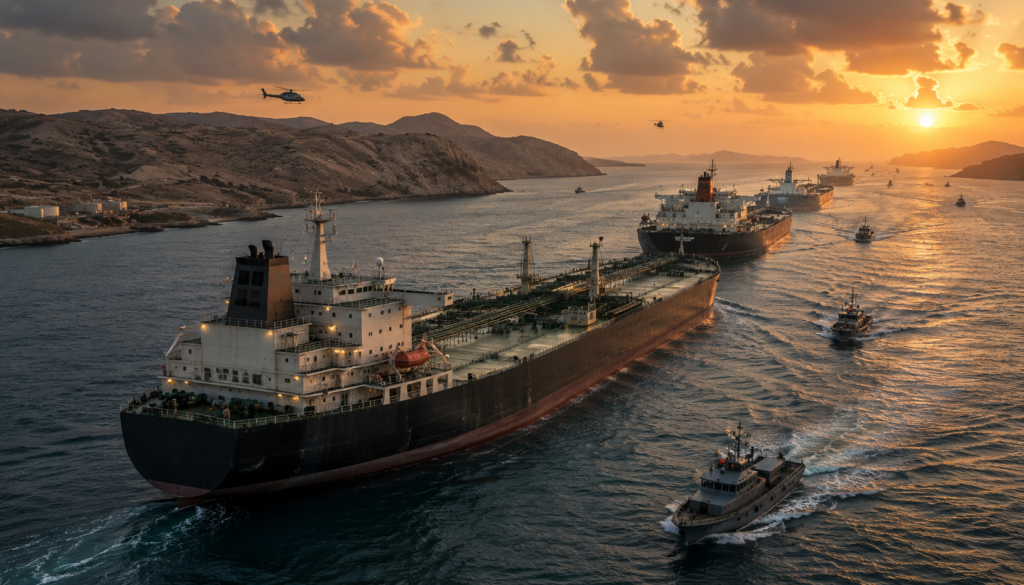
No single geographic feature has become more central to this conflict than the Strait of Hormuz — a narrow waterway between Iran and Oman through which roughly 20% of the world’s entire oil trade normally flows. When Iran closed the strait in early March, it triggered what the International Energy Agency described as the “largest supply disruption in the history of the global oil market.”
Brent crude surged past $120 per barrel in the immediate aftermath of the closure. The oil production of Kuwait, Iraq, Saudi Arabia, and the UAE collectively dropped by more than 10 million barrels per day by mid-March, as shipping lines rerouted to avoid not just the strait but the broader region. QatarEnergy declared force majeure on all LNG exports, dealing a particularly severe blow to European energy markets still vulnerable after the 2022 Ukraine-linked energy crisis.
In the United States, the average gasoline price jumped to $4.45 per gallon by early May — nearly 50% higher than when the conflict started. Globally, the war has more than doubled the price of kerosene-based products including diesel and jet fuel. Airlines have been forced to reroute around the Middle East, adding significant time and cost to intercontinental travel, while major airports in the region — including Dubai International, one of the world’s busiest — suffered damage and extended closures.
Analysts at Vitol estimate that one billion barrels of oil production will ultimately be lost due to the conflict, with current losses already between 600 and 700 million barrels. The economic cost to the world economy, depending on duration, is estimated between $590 billion and $3.5 trillion — equivalent to as much as 3.15% of global GDP.
Humanitarian and Economic Impact
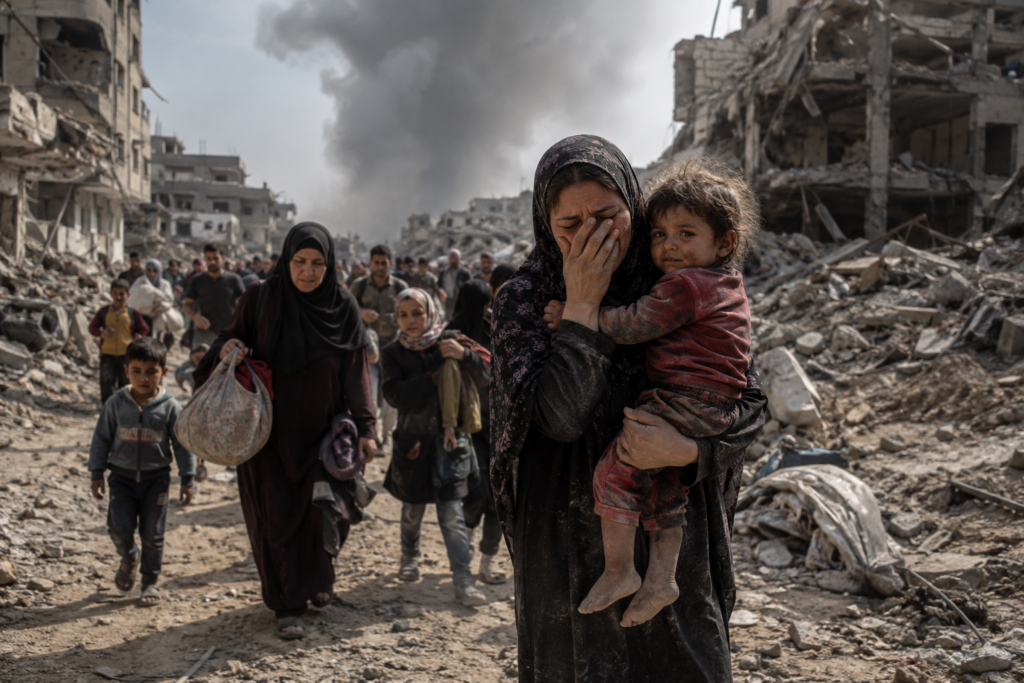
Behind the geopolitical calculations lies a human catastrophe that is difficult to overstate.
Inside Iran, the war has compounded an already fragile situation. The Iranian rial has collapsed to around 1.32 million per U.S. dollar. The IMF estimates the Iranian economy will shrink by 6.1% in 2026, with inflation running at 68.9%. Food prices have spiraled: bread and cereals are up 140%, and oils and fats have risen by 219% in the year through March 2026. Senior Iranian economic officials have reportedly warned President Pezeshkian that it may take more than a decade to rebuild the war-torn economy.
Compounding the suffering is a sweeping internet blackout. Since early in the conflict, Iran has restricted internet access, allowing connectivity only for government-approved users. The blackout has devastated the livelihoods of self-employed Iranians — many of them women — who relied on digital platforms to work and earn.
In the Gulf states, the crisis has taken a different but equally alarming form. The maritime blockade created what analysts called a “grocery supply emergency,” with over 80% of caloric intake in Gulf Cooperation Council nations dependent on Strait of Hormuz shipping. By mid-March, 70% of the region’s food imports were disrupted, causing consumer prices to spike 40–120% across the Gulf. Iranian strikes on desalination plants — which provide virtually all drinking water in Kuwait and Qatar — raised fears of a water security crisis affecting tens of millions of people.
Beyond the region, the World Economic Forum has warned that the conflict is delivering a “structural shock to the world economy,” one that is reshaping commodity markets, food systems, and geopolitical alignments in ways that could persist for years.
International Reactions and Diplomacy
The conflict has generated a fractures global response that reflects the deep divisions of contemporary geopolitics.
Pakistan has emerged as a surprising but important diplomatic actor, serving as a back-channel mediator between Washington and Tehran. Special Envoy Steve Witkoff and other U.S. negotiators have participated in Islamabad-hosted talks, while Iran’s foreign minister traveled to Beijing for consultations with Chinese counterparts on “regional and international developments.”
China has played a quiet but significant role. Beijing helped build the initial ceasefire framework and has diplomatic leverage with Tehran, though analysts caution that China may not be in a hurry to pressure Iran more forcefully — particularly as President Trump prepares for a high-stakes visit to Beijing. Russia, meanwhile, has shown little desire to come to Iran’s rescue despite their relationship.
NATO has been directly drawn in after an Iranian ballistic missile crossed into Turkish airspace, landing in Hatay Province. NATO Secretary General Mark Rutte reaffirmed the alliance’s commitment to defending Turkey, marking one of the most significant direct escalations involving a NATO member state.
Pope Leo, newly elected, has publicly opposed the U.S. war on Iran — drawing sharp criticism from President Trump. Secretary of State Rubio met with the pontiff to discuss the Middle East, reflecting the Vatican’s effort to raise humanitarian concerns on the world stage.
Germany, meanwhile, saw the U.S. announce the withdrawal of 5,000 troops — a move observers read as a signal of broader U.S.-European friction over the conflict’s management.
What Could Happen Next?
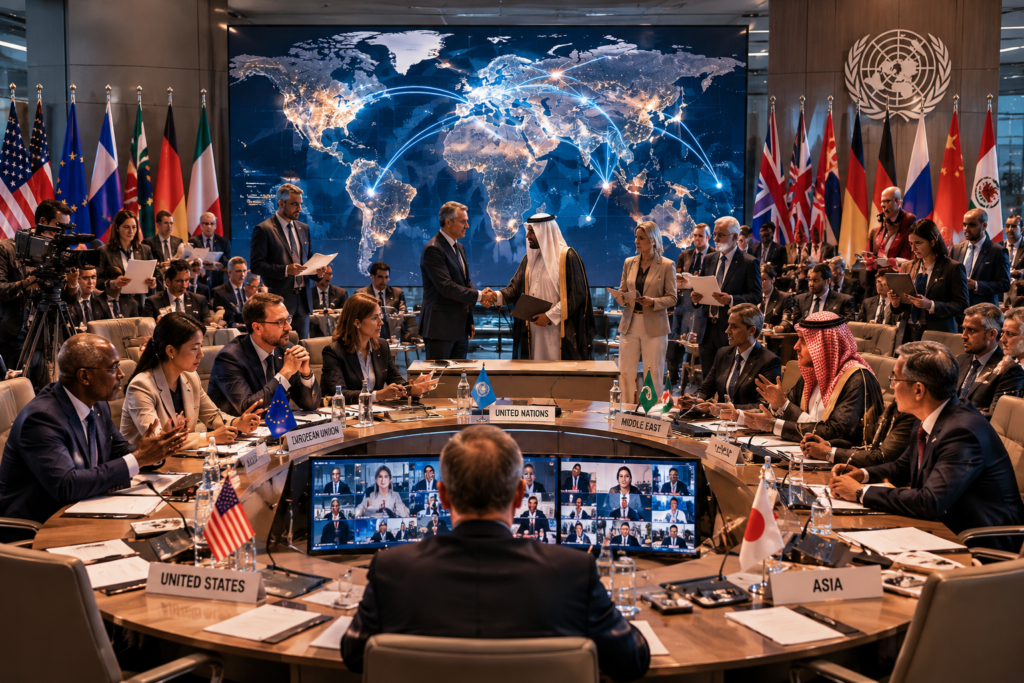
The coming weeks will be critical. Several scenarios are now in play, and the path the conflict takes depends on decisions being made in Washington, Tehran, Beijing, and Islamabad.
The most optimistic outcome is a negotiated ceasefire. There are signals from both sides that neither wants full-scale fighting to resume. The U.S. pausing of “Project Freedom” — its naval escort operation in the strait — and Rubio’s declaration that “Operation Epic Fury” is over suggest a genuine, if fragile, appetite for de-escalation. If Pakistan’s mediation succeeds in narrowing the gap between Iran’s conditions (which include Lebanon) and the U.S. position, a deal could emerge. Trump’s scheduled meeting with Xi Jinping in China next week could also shift dynamics, with Beijing potentially applying quiet pressure on Tehran.
However, the risks of renewed escalation remain high. Iran has not backed away from its threat to fire on unauthorized vessels transiting the Strait of Hormuz. Skirmishes between U.S. warships and Iranian forces continued through the first week of May. Any single incident — a ship sunk, a drone strike on a civilian target — could reignite the broader campaign.
A third possibility is prolonged stalemate: no major offensive operations, but no deal either, leaving the global economy to absorb an indefinite disruption to energy and food supplies. This is arguably the most dangerous outcome for global stability, as the economic pain mounts and domestic pressures build in countries from the Philippines to Germany.
Final Thoughts
The 2026 Iran war is not merely a regional conflict. It is a defining test of how the international order responds when military force, energy security, and humanitarian need collide simultaneously. The decisions made in the next few weeks — whether in a negotiating room in Islamabad, a summit in Beijing, or on the deck of a U.S. destroyer in the Strait of Hormuz — will shape not just the Middle East but the world economy for years to come.
Readers should watch several key indicators closely: the progress of Pakistan-mediated talks, the behavior of oil prices as a real-time barometer of market confidence in a resolution, the humanitarian situation in Iran and the Gulf states, and whether the Lebanon conflict can be separated or integrated into a broader ceasefire framework.
The situation remains deeply fluid. But the stakes — for millions of civilians, for global energy markets, and for the architecture of international security — could not be higher.
Frequently Asked Questions (FAQ)
Why is the Iran conflict escalating?
The current war stems from years of accumulated tensions over Iran’s nuclear program, its ballistic missile capabilities, and its network of regional proxies. The immediate trigger was a coordinated U.S.-Israeli airstrike on February 28, 2026, which killed Iran’s Supreme Leader and other senior officials. Iran’s military response, including the closure of the Strait of Hormuz, widened the conflict dramatically. The failure of diplomatic negotiations over Iran’s nuclear program in 2025 and 2026, combined with Iran’s weakened position after domestic protests and the June 2025 Twelve-Day War, appears to have convinced Washington and Tel Aviv that military action carried a lower long-term risk than continued diplomacy.
How does the war affect oil prices?
The closure of the Strait of Hormuz — through which approximately 20% of the world’s oil trade previously flowed — has caused the most severe energy supply disruption since the 1973 Arab oil embargo. Brent crude surged past $120 per barrel, gas prices in the United States jumped nearly 50%, and jet fuel costs more than doubled globally. Countries heavily dependent on Gulf oil imports, particularly in Asia, have been forced to tap strategic reserves and implement emergency rationing measures.
What is the Strait of Hormuz?
The Strait of Hormuz is a narrow body of water connecting the Persian Gulf to the Gulf of Oman, bordered by Iran to the north and Oman to the south. It is the world’s most critical energy chokepoint — before the war, roughly 15–20% of global oil trade and a large share of liquefied natural gas exports passed through it daily. Its closure has disrupted supply chains, driven up commodity prices, and triggered food and energy emergencies across multiple continents.
This article reflects information available as of May 8, 2026. The situation is actively evolving. Readers are encouraged to follow verified news sources for the latest updates. Newworldupdates